
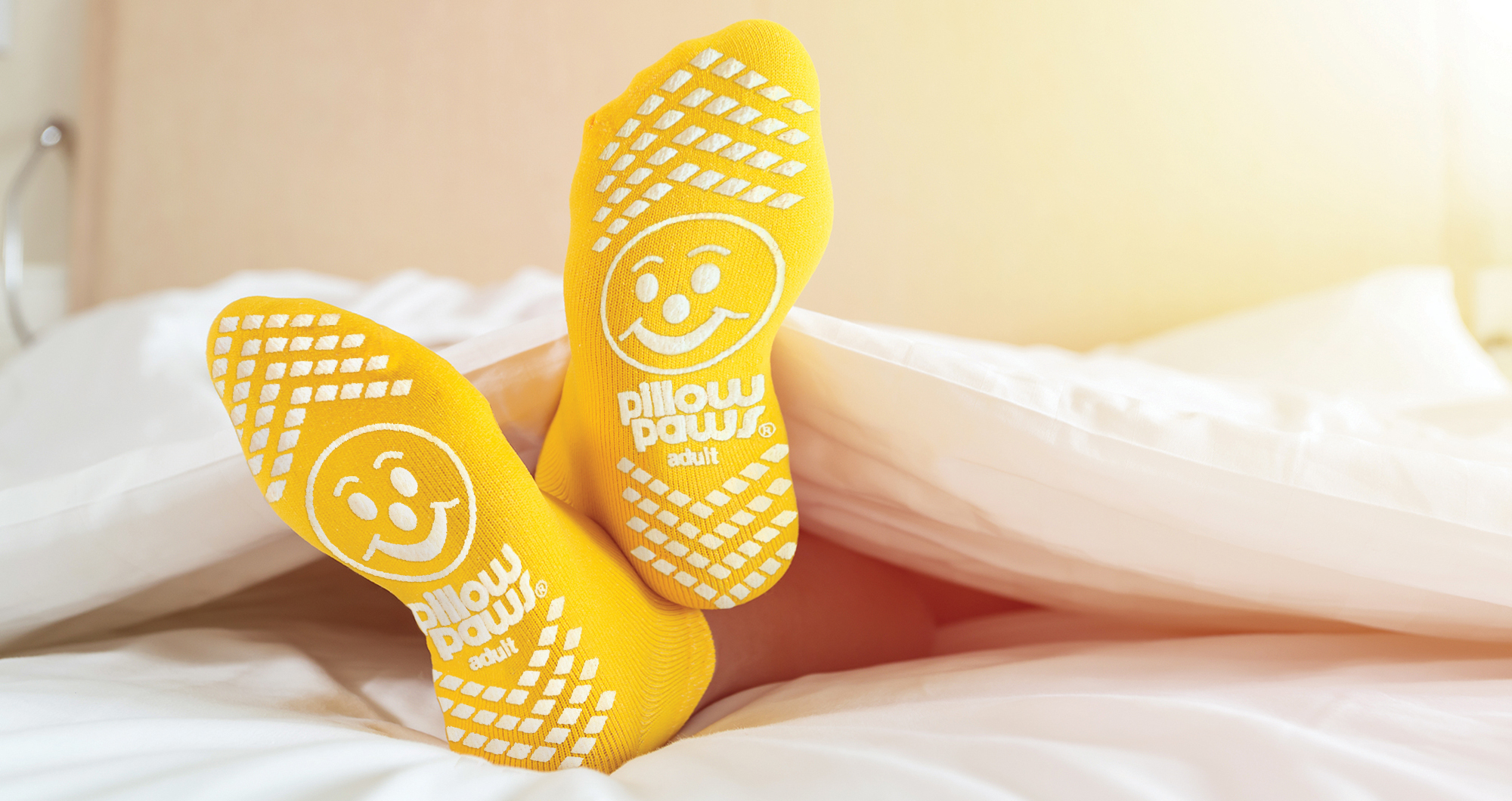
Slip-resistant socks are one of the small things that make a big difference during a hospital or long-term care stay. But what many people don’t realize is that the sock and grip itself needs to be cared for to maximize lifetime and effectiveness.
If your grippy socks use a puff ink (also known as plastisol), the raised rubbery texture on the sole of the sock, how you wash and dry them impacts how long they’ll stay properly slip-resistant.
This article will talk about proper washing and care tips to help make the grip stay fresh and last longer and how to know when it’s time to replace them.
Why Care Matters
A little extra care goes a long way. The raised ink puff texture is what creates traction against the ground and gives the sock its non-slip properties when you take a step. Over time, heat and harsh washing conditions will break that texture down. Once the puff flattens or becomes smooth, the sock may still look fine — but the slip-resistance is reduced.
As a general recommendation:
- Limit washing non-slip socks to once every 15 wash cycles if they’re used in commercial or high-heat laundry environments.
- In gentler homecare settings, they can last much longer if you take care of them and watch for signs of wear.
How to Wash Slip-Resistant Socks
1. Wash Inside Out 🧺
- Turning grip socks inside out reduces abrasion on the puff grips during the machine washing cycle.
2. Use Cold or Warm Water 🌡
- Cold water is the best for puff ink. Warm and cool water are also okay, but hot water is not recommended for washing.
- Avoid high heat – plastisol can soften and degrade over time.
3. Use a Gentle Cycle 🔄
- Less agitation in the cycle means less mechanical wear-and-tear on the silicone grips.
4. Use a Mild Detergent🧴
Avoid the following substances, which may break down the plastisol grip or leave residue that reduces grip performance:
- Bleach
- Fabric softeners
- Chemicals and stain removers applied directly to the grip area
5. Air Dry Whenever Possible 🌬
- Heat is the #1 enemy of puff ink.
- If you must use a dryer, use the low heat setting and remove the socks promptly when the cycle is finished.
- Using high heat when drying grip socks can flatten the puff texture, make the grip material brittle and cause it to crack or peel.
How Long Do Puff Grips Last?
The lifespan of grippy socks depends heavily on the usage and care method:
| Care Method | Expected Grip Life |
| Air dried, cold wash | 50–75+ washes |
| Low heat dryer | 30–50 washes |
| Frequent high heat drying | 15–30 washes |
In commercial settings like hospitals, gyms or trampoline parks where socks are industrially washed and heat-dried, grips can easily be degraded after only 15 cycles.
Signs It’s Time to Replace Them
Even if the sock fabric still looks good, the grip elements may not be performing at the highest quality.
Signs to watch for:
- Puff ink flattening
- Grips becoming smooth or shiny
- Cracking or peeling in the ink
- Any degree of reduced traction on smooth floors like tile or hardwood. If you can slide across the floor – even a little bit – it’s time for a new pair.
What Causes Grips to Wear Out Faster?
Some factors that may accelerate breakdown include:
- High dryer heat and industrial laundering
- Walking on rough surfaces like concrete or wearing outdoors
- Dragging feet instead of lifting them
- Overstretching the sock or pulling the puff print apart
Pro Tip: Safety First
Since slip-resistance is important for safety, especially during medical use and for individuals who have a high risk of falls, it is important that you don’t wait too long to replace grippy socks after noticing signs of wear and tear. Grip performance isn’t just about comfort; it’s a safety feature that enhances protection and peace of mind.
Taking a few simple laundry precautions can significantly extend the life of your slip-resistant socks so that they keep doing their job as effectively as possible.
As a final thought, remember – a little extra care with your safety socks goes a long way toward keeping you safely on your feet.